Charge At Home
EV Charger Installation In The Washington, DC Metropolitan Area
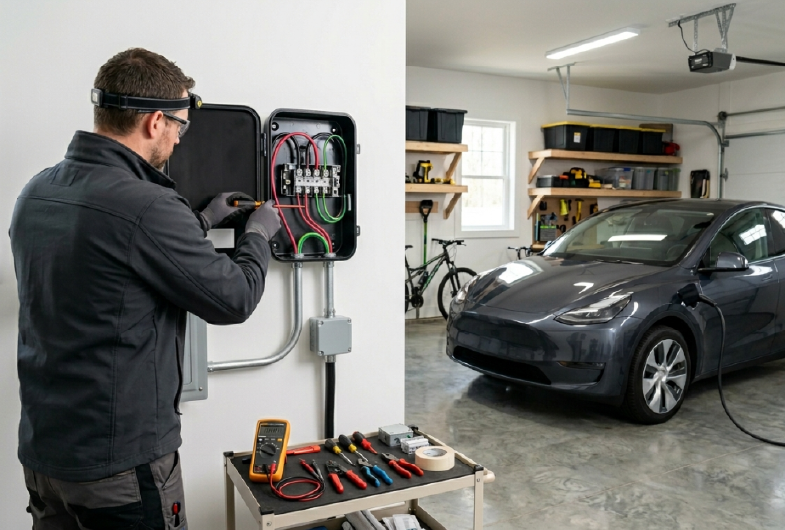
Home charging works best when the circuit, panel, charger, and parking position all make sense together. QTEC Ventures plans EV charger installation around that complete setup.

Faster Charging Begins With The Electrical Capacity Behind It
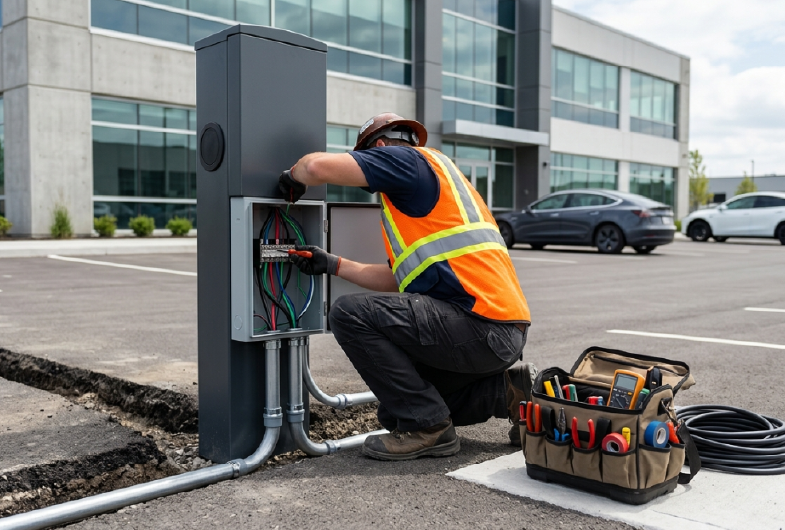
A wall charger may look simple once mounted, but Level 2 charging can add a meaningful new load to a residential electrical system. Panel capacity, breaker space, service size, circuit length, and the charger’s amperage all influence how the installation should be approached.
Through EV charger installation across the DMV, QTEC Ventures evaluates load calculations, dedicated charging circuits, EVSE requirements, wiring routes, and equipment placement. The goal is to build a charging setup that matches both the vehicle and the electrical system supplying it.
Where You Park Can Change The Entire Installation
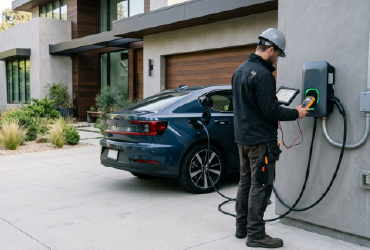
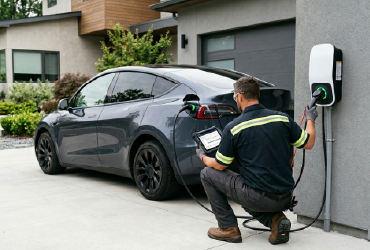
A charger near the panel may require a relatively direct wiring path, while a detached garage, opposite-side driveway, or distant parking space can change conduit, cable length, mounting, and installation access. Connector reach matters too, especially when vehicles are parked in different orientations.
- Level 2 Charger Installation
- Tesla Charger Installation
- Dedicated EV Circuits
- Home Charging Stations
Homeowners reviewing wider electrical services in the Washington, DC Metropolitan Area can coordinate EV charging with panel changes, new circuits, wiring improvements, or other electrical upgrades that may already be planned for the property.
The Charger Should Fit Both The Vehicle And The House
Some drivers use hardwired wall chargers. Others may need a NEMA 14-50 receptacle for compatible equipment. Charging speed, daily mileage, EVSE specifications, available electrical capacity, and future vehicle plans can all influence which setup makes the most sense.
A residential electrician in the Washington, DC Metropolitan Area can review household demand alongside the proposed charging circuit, helping determine whether the existing panel can support the added load before installation begins.
Circuit Ready
Home Charging Depends On More Than Choosing A Charger
01
Capacity
Panel load, service size, breaker space, charger amperage, and household demand are reviewed before a new Level 2 charging circuit is installed.
02
Circuit
A dedicated 240-volt EV charger circuit is sized around equipment requirements, wiring distance, breaker protection, and the charging load expected during regular use.
03
Placement
Wall space, connector reach, parking habits, weather exposure, and wiring access all influence where residential EV charging equipment should be mounted.
04
Protection
If added charging demand raises breaker concerns, circuit breaker services in the Washington, DC Metropolitan Area can address tripping, compatibility, or circuit-protection issues.
Get in Touch
Contact Info
- (202) 871-4900
- admin@qtecventures.com
- 1227 Marion Barry Ave SE #102 Washington DC 20020
Daily Charging
What Changes When Charging Becomes Part Of The Driveway Routine
Homeowners choose QTEC Ventures for EV charging setups that account for panel capacity, circuit design, equipment compatibility, parking position, and the practical rhythm of daily driving.
Charging Questions
EV Charger Questions From DC Metro Homeowners
No. Level 2 charger installation in the Washington, DC Metropolitan Area may work with the existing panel if sufficient capacity and breaker space are available. A load calculation helps determine whether an upgrade is actually necessary.
A dedicated 240-volt circuit supplies power specifically to the EV charger rather than sharing the circuit with other household equipment. Breaker size, conductor sizing, and charger requirements must all match the intended charging load.
Yes. Tesla charger installation in the Washington, DC Metropolitan Area can include panel review, circuit planning, wiring, mounting, and electrical connection. QTEC Ventures also considers parking position and connector reach before choosing the final charger location.
No. A NEMA 14-50 receptacle provides a 240-volt connection for compatible plug-in EVSE, while a wall charger may be hardwired directly. The preferred option depends on equipment, charging goals, and installation conditions.
There is no single ideal distance. Shorter routes can simplify installation, but charger placement should still work with parking access. Panel location, wall construction, conduit needs, and cable routing all affect the final design.