Charge At Home
EV Charger Installation Services Across The Baltimore Metropolitan Area
A home charger turns parking time into charging time, but QTEC Ventures starts with the electrical system behind it. Baltimore Metro installations are planned around capacity, circuit requirements, and where the vehicle actually parks.

The Charger Is Only One Part Of The Installation
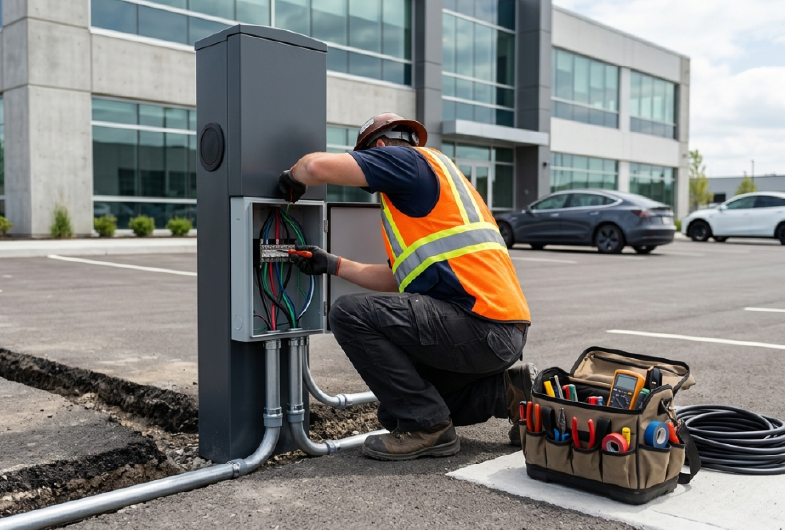
A Level 2 charger may look like a single wall-mounted device, yet its performance depends on everything feeding it. Available panel capacity, breaker space, circuit length, amperage, charger specifications, and existing household demand all influence the installation behind the unit.
Homeowners considering EV charger installation across the DMV can have those electrical details reviewed before choosing the final setup. That helps determine whether the project needs hardwired EVSE, a receptacle such as NEMA 14-50, or another dedicated charging arrangement.
Parking Location Can Change The Entire Wiring Route
A charger placed beside an attached garage wall creates a different project from one serving a detached garage, exterior parking space, or driveway. Distance from the panel can affect conductor routing, conduit, mounting location, and the practical reach of the charging cable.
- Level 2 Charger Installation
- Tesla Charger Installation
- Dedicated 240-Volt Circuits
- Home Charging Stations
Related electrical services in the Baltimore Metropolitan Area can address supporting wiring, circuits, panels, or electrical panel upgrades when the existing system needs changes before the charger can be connected properly.
Charging Demand Has To Fit The Rest Of The House
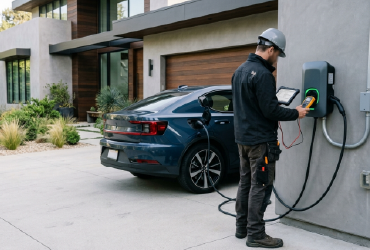
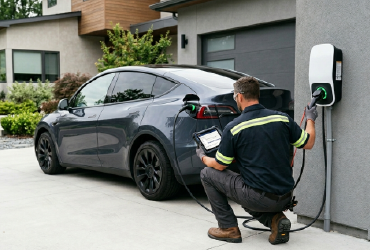
An EV charger becomes one of the larger electrical loads in many homes. That does not automatically mean the service must be upgraded, but it does mean household demand should be evaluated before adding another substantial circuit.
A residential electrician in the Baltimore Metropolitan Area can review panel capacity, existing loads, breaker space, and home wiring as part of the charging project. Load calculations help determine what the electrical system can reasonably support.
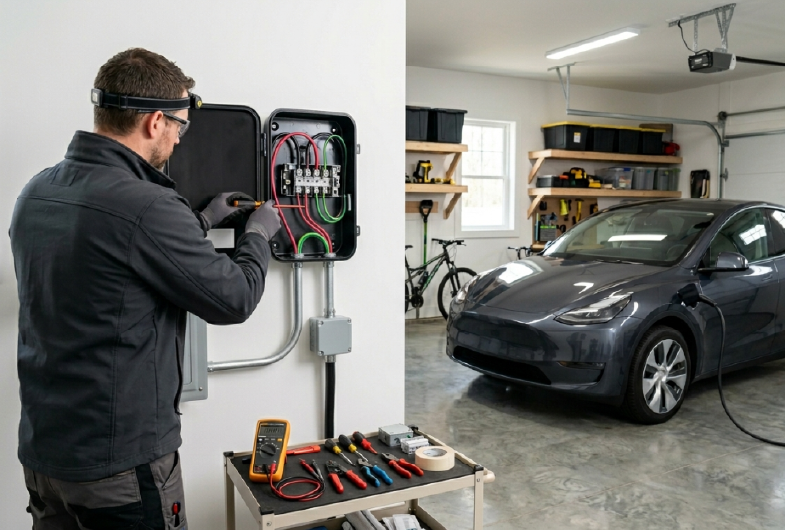
Ready To Plug In
Home Charging Works Best When Each Component Matches
01
Electrical Review
Panel rating, household demand, breaker availability, and charger amperage are evaluated together before installing a dedicated EV charging circuit.
02
Circuit
Level 2 charging typically requires a dedicated 240-volt circuit sized around charger specifications, wiring requirements, breaker protection, and available electrical capacity.
03
Placement
Parking position, cable reach, wall space, weather exposure, and wiring distance help determine where the EVSE can be mounted for convenient everyday use.
04
Protection
Related circuit breaker services in the Baltimore Metropolitan Area can address compatibility, circuit protection, recurring trips, or breaker concerns identified during charger planning.
Get in Touch
Contact Info
- (202) 871-4900
- admin@qtecventures.com
- 1227 Marion Barry Ave SE #102 Washington DC 20020
Charging Routine
What Changes When Home Charging Fits Your Schedule
Instead of planning routine charging around public stations, the vehicle can recover range while it is already parked. QTEC Ventures focuses on making the electrical side of that routine practical, accessible, and appropriate for the home.
Charging Questions
EV Charger Questions From Baltimore Metro Homeowners
Home EV charger installation in the Baltimore Metropolitan Area may require a dedicated 240-volt circuit, compatible breaker, properly sized wiring, suitable charger location, and enough available electrical capacity. The exact setup depends on the EVSE specifications and the home’s existing system.
Level 2 charging generally provides faster home charging than a standard 120-volt connection, making it practical for drivers who recharge frequently. Actual charging speed depends on the vehicle, charger output, circuit capacity, and the maximum charging rate the vehicle can accept.
Not every home needs a panel upgrade. A load calculation can show whether the existing service and panel have enough capacity for the proposed charger. Limited capacity, insufficient breaker space, or older equipment may make additional electrical work necessary before installation.
The better setup depends on charger requirements, installation location, desired amperage, and how the equipment will be used. Some EVSE is designed for hardwiring, while compatible plug-in chargers may use a properly installed NEMA 14-50 receptacle and dedicated circuit.
Yes. QTEC Ventures can install Tesla charging equipment and compatible EVSE for other electric vehicles when the charger specifications and home electrical system support the installation. Planning includes circuit requirements, capacity, mounting location, and the vehicle’s expected charging needs.