
Charging Infrastructure
Commercial EV Charging Installation Across The Baltimore Metropolitan Area
A few chargers can change the electrical demands of an entire parking area. QTEC Ventures plans commercial EV charging installation in the Baltimore Metropolitan Area around vehicles, power availability, and site use.

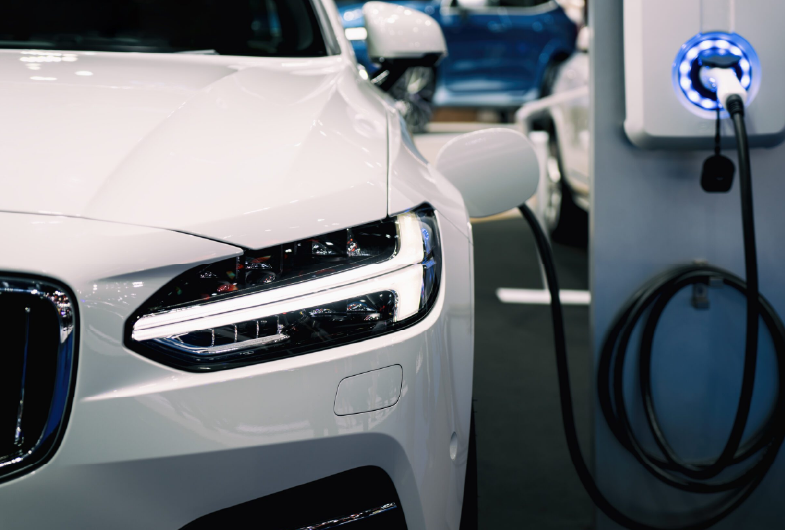
Charging Needs Begin With Vehicle Behavior, Not Charger Count
A fleet returning at the same hour creates a different load pattern from employees parked through the workday. Multifamily properties add shared access, overnight charging, and questions about how multiple drivers will use the same electrical infrastructure.
For broader projects involving commercial EV charging installation across the DMV, charger quantity is considered alongside dwell time, Level 2 charging, networked chargers, and future fleet electrification. QTEC Ventures uses those operating details to avoid building a charging layout around equipment alone.
Electrical Capacity Can Reshape The Parking Plan
The preferred parking spaces may not always be the simplest places to supply power. Service capacity, panel location, trenching distance, conduit routes, accessible spaces, and room for additional chargers can all influence the final design.
- Workplace EV Charging
- Fleet Charging Systems
- Multifamily Charging
- Commercial Level 2 Chargers
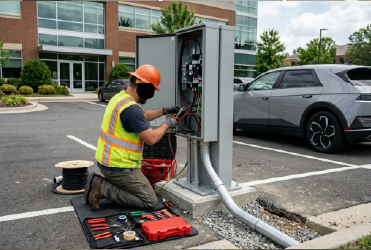
A wider review of electrical services in the Baltimore Metropolitan Area can identify panel, circuit, wiring, or service changes that should happen alongside the charging project rather than after equipment has already been selected.
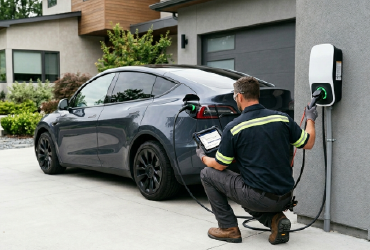
Shared Charging Requires More Planning Than A Single Dedicated Port
Business EV charging stations may serve employees, customers, tenants, fleet vehicles, or several of those groups at once. Networked chargers and load management can help allocate available power without assuming every vehicle needs maximum charging output at the same moment.
When added charging demand affects commercial panels or service capacity, a commercial electrician in the Baltimore Metropolitan Area can evaluate the electrical distribution behind the site before new EV infrastructure begins drawing power.
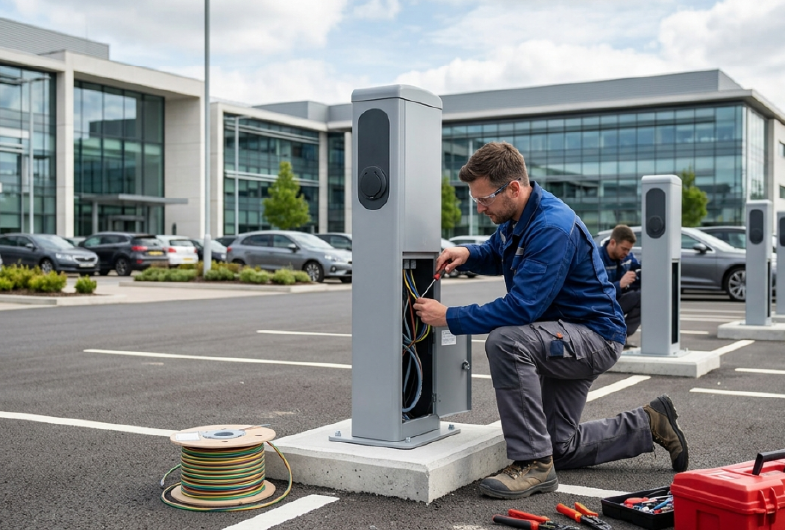
Site Power
Commercial Charging Works Better When Parking And Power Align
01
Load Planning
Service size, panel availability, current usage, charger quantity, and future growth are evaluated before additional EV charging demand is introduced.
02
Placement
Parking flow, connector reach, accessible spaces, pedestrian movement, conduit paths, and equipment protection all influence where commercial chargers should be positioned.
03
Management
Load management and networked chargers can divide available electrical capacity across vehicles while giving site operators more control over charging activity and demand.
04
Visibility
Charging areas used after dark may benefit from commercial lighting in the Baltimore Metropolitan Area planned around parking, walkways, equipment, and driver access.
Get in Touch
Contact Info
- (202) 871-4900
- admin@qtecventures.com
- 1227 Marion Barry Ave SE #102 Washington DC 20020
Daily Use
What Becomes Important Once The Chargers Are In Regular Use
The practical details become obvious after installation: drivers need clear access, connectors need to reach, and available power has to be shared sensibly. QTEC Ventures plans with that everyday use in view.
Charging Questions
Commercial EV Charging Questions From Baltimore Metro Properties
Commercial EV charging installation in the Baltimore Metropolitan Area should begin with parking layout, electrical capacity, charger quantity, vehicle dwell time, conduit routes, and expected charging demand.
Yes. Commercial Level 2 chargers in the Baltimore Metropolitan Area can suit workplaces where vehicles remain parked for several hours and do not require rapid charging.
Load management distributes available electrical capacity among multiple chargers, reducing the need for every unit to draw its maximum output at the same time.
Fleet EV charging installation in the Baltimore Metropolitan Area should consider route schedules, daily mileage, return times, charging windows, vehicle count, and future fleet expansion.
Yes. Multifamily EV charging in the Baltimore Metropolitan Area can serve shared or assigned spaces when electrical capacity, resident access, networked equipment, parking rules, and future demand are considered.